Freitag, 19. Oktober 2018

N° 28 Über Kunst und Lücken, oder: Danke Bansky! // About Art and Voids, or: Thank You Bansky!


please scroll down for English Version


In den letzten Jahren fällt mir auf, dass ich von „Lücken“ umgeben bin. Natürlich keine tatsächlichen, physikalischen Lücken, - zum Glück. Eher Lücken in der Kommunikation, Lücken im Umgang mit Privatpersonen. Denn dort wo früher alle waren, ist jetzt keiner mehr. Welche Orte meine ich? Größtenteils meine ich geistige Orte. Wenn man sich selbst gerne tiefgehender auf Kunst einlässt, muß man bald feststellen, dass man an dem jeweiligen geistigen Ort alleine ist. Speziell bildende Kunst hat einen schweren Stand. Die Leute brauchen nicht mehr großartig in Gemälde oder Photographie zu investieren, sie können sich alles im Internet anschauen, in null Komma nichts von einem Bild zum nächsten zappen, für jedes einen kurzen Augenblick, den Bruchteil einer Sekunde. Dazu muß man auch nirgends hingehen, extra einen bestimmten Ort aufsuchen. Man kann sich Kunst an der Bushaltestelle ansehen, im Bett, auf dem Klo, in der S-Bahn. Wozu also in eine Ausstellung gehen oder gar ein Gemälde erwerben, - man müßte sich auf ein Exemplar festlegen, das man dann für lange Zeit hat und immer wieder anschauen würde. Wie langweilig, - wo es doch Millionen andere Bilder auf dem Smartphone zur Ansicht gibt oder auf dem PC. Will man wirklich etwas für eine Wand zu Hause, kann man sich einfach etwas herunterladen und ausdrucken (lassen), im handlichen Format. Gefällt einem das nicht mehr, beschafft man sich einfach das nächste. Kein Problem, ist ja billig. Mit Photographien verhält es sich ähnlich, - dank Photoshop und privater Photobuch-Erstellung ist auch hier Abwechslung und kostengünstige Selbstversorgung garantiert.

Hier entsteht die Lücke in der Dauer, die genaues Hinsehen und längeres Verweilen bei einer Sache oder einem Objekt ermöglichen. Diese Lücke setzt sich fort und dehnt sich aus, wenn man mit den Leuten über Details von Kunstwerken, Filmen, Musik reden möchte. Dabei können Einzelheiten, Nuancen unheimlich wichtig sein und es kann sehr interessant und bereichernd sein über sie zu sprechen. Dabei muß man nichts zerreden oder zerpflücken, aber ein Austausch jenseits der Gemeinplätze und Klischees hat seinen Wert. Für längere Gespräche hat man als fleißiger User aber keine Zeit, - man könnte etwas verpassen, was gerade online geschieht.

Dann frage ich mich: was ist wirklich wichtig für meine Mitmenschen? Womit befassen sie sich die meiste Zeit? Der Focus liegt auf dem Nutzen von Möglichkeiten. Es sollten immer möglichst viele Auswahl-Möglichkeiten zur Verfügung stehen und man sollte unbedingt die Ausstattung haben um sich dieser Auswahl bedienen zu können...sie „nutzen“ oder „anwenden“ zu können (siehe letzter blog N° 27). Dabei will man unabhängig sein von persönlichen Standorten oder (Öffnungs-)Zeiten, - die einzige Abhängigkeit die man akzeptiert, ist die vom www und dessen Verfügbarkeit.

Die Lücke entsteht aber nicht nur im Inhalt der Kommunikation, sondern auch  in ihrer Form. Die Leute versuchen auch dafür das www und seine Erscheinungsformen zu nutzen und direkte Kommunikation von Mensch zu Mensch möglichst zu vermeiden. Man soll doch eine e-mail schreiben, anstatt anzurufen, oder eine whatsapp, oder sich über die sozialen Medien melden. Ist man nicht ständig online, entsteht dabei auch eine zeitliche Lücke, denn  die Antwort ist nicht direkt, man mail oder sms warten.

Kunst auf dieselbe Art „nutzen“ zu wollen wie man eine Pizza-Service-App nutzt halte ich für fragwürdig. Kunst hat eine ähnliche Funktion wie ein Stolperstein, oder ein sperriges Element, das sich einem (manchmal unvermittelt) in den Weg stellt. Kunst ist das genaue Gegenteil von Lücke. Sie soll zum Innehalten, Staunen, Reflektieren anregen. Natürlich kann sie dabei auch schön sein, - muß es aber nicht unbedingt… Wie bei einem Menschen fesselt einen nicht notwendigerweise nur Schönheit. Es kann auch „das gewisse Etwas“ sein. Manchmal ist etwas sogar so häßlich, dass es fast wieder schön ist. Oder da ist etwas was man nicht ganz und gar verstehen oder erfassen kann, und deshalb möchte man sich intensiver damit beschäftigen.

Leider läßt sich die Kunst seit einigen Jahren viel zu sehr vor den Karren des use-it Geistes spannen indem sie versucht in ihm mitzufahren. Dadurch, daß Kunst versucht genau dort zu sein wo alle sind (www), wird sie selbst zur Lücke, - löst sich in der Lücke auf, ist nicht mehr sperrig. Kunst User-kompatibel gemacht: slick, clean, durch-designed, schnell austausch- und leicht abgreifbar.

Natürlich muß auch ein Künstler von irgendwas leben und es ist traurig, dass man gezwungen wird sich selbst als used „User“ in der virtuellen Welt angemessen zu präsentieren um wahrgenommen zu werden (was zusätzlich viel Zeit und Energie kostet), und/oder einen zeit-intensiven Nebenjob zu machen. Aber es ist eben nicht nur traurig, sondern auch gefährlich. Denn so wird man als Kunstschaffender dazu verführt die einfachsten Wege zu gehen, sich Stromlinien-förmig zu machen. Man kämpft nicht nur um materielles Überleben, sondern auch noch gegen Zwänge (oder mit Zwängen) von Übereinkünften die als „modernes Leben und Arbeiten“ definiert werden. Diese Übereinkünfte werden zu erheblichen Teilen von Werbung festgelegt und dirigiert und dienen hauptsächlich den Interessen der Kapital-schaffenden. Ich will nicht sagen, daß es nicht auch diese Spezies geben muß, um als Zivilisation zu existieren. Aber als Künstler sollte man wissen wo man steht, -  nämlich im Verhältnis zu jener Spezies wie der Adler zum Jäger.     

Aktionen wie die von Bansky bei Sotheby‘s sind daher ein Segen, denn sie erinnern an diese Verhältnismäßigkeit. Und es ist gut, dass ein so bekannter Künstler wie er so etwas tut, denn er kann es sich finanziell leisten und wird von einer breiten Öffentlichkeit wahrgenommen...in der Lücke und als sperriges Element.


BerylliumN


N° 28   About Art and Voids, or: Thank you Bansky!


For quite some time now I feel like being surrounded by voids. Not actual, physical voids obviously, but voids in communication and contact with people, because at places where everybody used to be, there is hardly anybody now. What places am I talking about? Well….mostly spiritual places... and I don‘t mean esoteric stuff! I mean, if you are a person who likes to really go in for art, you might probably find yourself alone at this particular intellectual place especially when you are into visual arts. People don‘t need to buy a painting, a photography, music, films etc., or go to places in order to look at it or listen to it nowadays, - they can zap through loads of it on their smartphone or i-pad or computer, in like no time at any place they like. They can watch a movie on a park bench, listen to music on the bus, see paintings of any artist they want where ever they are, - even on the loo. So why actually go to see an exhibition or buy a painting and hang it in your flat? You would have to settle yourself with this one option and get back to it again and again. What a scenario for a modern person...that much of a commitment! And so boring...not to speak of all the other paintings this person would miss while contemplating about just the one on his or her wall…

And even if you decided to get one particular image for your apartment, you still don‘t have to get involved with artists or art-dealers, - you can simply download a version and print it yourself and put it in a clip-frame. Simple and cheap. Or if you prefer photographies...no problem, it‘s the same procedure and thanks to photoshop and do-it-yourself photobooks you can either use your own material and edit a picture, or sample some from the net, - availability and diversion granted. Here the void arises in the durability which contemplation and patient observation would offer. This void expands and continues if you try to talk with people about details of artwork, films or music. I think fine nuances are often important or even crucial and it can be very interesting and inspiring to discuss them. It‘s not necessary to flog matters to death of course, but communication beyond platitudes certainly has its value. Unfortunately the keen User hasn‘t got time for that…he might miss something extraordinary happening online…

I‘ve been asking myself: what is really important for my fellow-human beings? What are their most beloved occupations? The focus clearly is on the ability to use options, to have as many possibilities on hand as...well...possible. :-) And to have the adequate equipment for it (q.v. blog N° 27). People want to be independent of opening hours or location. The only kind of dependency they accept is on the www and its availability.

The void doesn‘t only occur in the contents of a communication, but also in its form. People tend to avoid human contact and transfer as much communication to electronic devices as possible.
There‘s always the suggestion to better write an email or Whatsapp or use social media. If you don‘t want to be constantly online, gaps in conversation are inevitable.

To use art in the same way as a Call-a-Pizza-App for me seems highly questionable though. Art doesn‘t work like that. Art is meant to be cumbersome and demanding, - it demands involvement of the receiver and some kind of commitment. Art is the antipode of a void, it is meant to amaze, to have impact and to be an incentive. It might even be nice (or beautiful), but not necessarily, - attractive as it „attracts“ attention, yes...but as with human attraction, it can also just have „that certain something“ or be so damn ugly it starts to get nice again (or particularly interesting). Or there might be something to it which we can‘t quite understand, so we feel the urge to take a closer look.

Unfortunately over the last decade art became a servant of the „using-spitrit“  by getting used. In trying to be where everybody else is, - namely the www, itself becomes a void, dissolves in the vacuum, stops being cumbersome, art made User-compatible: slick, clean, well-designed, quick exchangeable and easy to get a grip at.

Of course, - artists do need money to exist. But it is a sad fact that artists are forced to take care of representing themselves in the virtual world of the net...the used User…to get noticed and acknowledged. Taking care of that also consumes a lot of energy and money, as well as the other option: taking on under-payed part-time jobs

But this is not just sad, it‘s also dangerous. Because by collaborating with the User-spirit artists are seduced to choose the easy way and become streamlined. So as an artist you do not only have to fight for direct survival, but also against the coercions imposed by common agreements defining „modern lifestyle and work“. These agreements largely get determined and manipulated by advertisers to serve the interests of capital-raisers. I‘m not saying this species hasn‘t got its validity for a civilization… But as artists we should know our place: our relation to this other species should be like the relation of the eagle to the hunter.

Considering all that, Happenings like Banskys at Sotheby‘s shine like a light bulb because they are a reminder of this above-mentioned ratio. And it is a good thing a well known artist like he did it...for he can afford it financially and his actions are perceived by a wide public...in the void and outside it. ;-)


BerylliumN


Donnerstag, 11. Oktober 2018

N° 27 User Teil II // User Part II

please scroll down for English Version


Kürzlich bin ich in einen in einen Media Markt gegangen um einen neuen DVD-Spieler zu kaufen. Zu meiner Überraschung sagte mir der Verkäufer, daß es nicht mehr so viele Modelle gibt mit einem DVD/CD – Laufwerk. Auf meine Frage wie man denn sonst Filme sieht die nicht im Fernsehen laufen und ohne dabei ins Internet zu müssen runzelte er die Stirn und sah mich erstaunt an. Man kaufe sie eben on-line und lädt sie sich herunter auf die Festplatte. Diese Festplatten mit größerem Speicher seien meist ohnehin in den neuen Fernsehgeräten integriert. Als ich ihn dann fragte, was man macht wenn die Festplatte voll ist, schmunzelte er in sich hinein und meinte dann müsse man eben etwas löschen…

 
Zum Glück (für mich ganz persönlich) gab es noch den einen oder anderen „normalen“ DVD-Spieler und wenig später verließ ich mit einem Exemplar den Store. Allerdings ließ mir das Ganze keine Ruhe, -  es ging los mit der Kontemplation und mich beschlich langsam aber unaufhaltsam die Erkenntnis, daß man auch in diesem Teil des Lebens zu einem Benutzer, - einem „User“ erzogen wird: man besitzt geistiges Gut nicht mehr in Form von greifbaren Dingen, wie Büchern, Ton – und Bildträgern (CDs und DVDs o.ä.), wirklichen Gemälden oder Photographien, sondern man kauft, leiht oder least Daten. Diese Daten lädt man von großen Daten-Sammellagern oder Speicherplätzen herunter auf ein privates kleineres Datenlager, - einen Kindle, den persönlichen Computer, den Fernseher, das Smartphone, etc.

 
So wird man vom Kunden zum Nutzer, zum „User“. Für sein Geld erhält man eine Benutzungs-Option beziehungsweise digitale Daten an Stelle von Gütern, die man anschließend selbst verwalten muß, indem man sie auf einem dafür ausgelegten Gerät speichert, immer wieder speichert, oder löscht. Eine weitere Aufgabe die einem bei diesem Deal zufällt ist dafür zu sorgen, daß man die entsprechenden Geräte zur Verfügung hat die auf dem neusten Stand sind (wie etwa den Fernseher mit integrierter Festplatte). Es reicht also nicht mehr aus ein Buch aufzuschlagen um mit dem Lesen beginnen zu können, - man benötigt drei Dinge dazu: ein Datenspeicher-Gerät (den Kindle), Elektrizität (Netzteil oder Akku) und die Software um die Daten zunächst erhalten zu können (auf dem Kindle). Ach ja! Und natürlich eine Verbindung zur virtuellen Welt des www. Also sind es eigentlich vier Komponenten. Trotzdem wird behauptet dies sei unkompliziert und praktisch…? So oder so ähnlich verhält es sich mit Photographien, Bildern im allgemeinen und Musik. Zugegeben, man spart sich Lagerplatz (Regale etc) und Gewicht. Gut. Aber unkompliziert sieht für mich anders aus. Ich erlebe auch oft im Freundes – und Bekanntenkreis, wie die, Leute viele viele Stunden damit zubringen ihre Geräte in Gang zu setzen oder am Laufen zu halten, oder sich bemühen die „effizienteste“ Vorgehensweise zu erlernen, um die Daten möglichst vorteilhaft (oder überhaupt) verwalten zu können. Manchmal macht das Gerät irgendetwas mit dem der/die Benutzer/in nicht gerechnet hatte und dann dauert es oft lange bis herausgefunden werden kann was genau falsch gelaufen ist.

 
Außerdem ist da noch etwas anderes: ich persönlich sehe mir Filme die ich, - aus welchen Gründen auch immer, für besonders gut halte, gerne öfter an. Manchmal mehrmals hintereinander. Manchmal komme ich über längere Zeitspannen immer wieder darauf zurück. Deshalb habe ich mir solche Filme auf DVD gekauft, und diese Investition hat sich für mich bisher stets gelohnt…genauso wie bei CDs oder Büchern. Was also wenn es keine DVD oder CD - Spieler mehr geben wird? Und keine „echten“ Bücher? Nun, man könnte sagen (wie der Verkäufer): einfach was löschen und wenn man es wieder haben will erneut herunterladen. Tja, - zum Einen habe ich schon des öfteren bemerkt, daß es manche, etwas speziellere Filme (nerd stuff) gar nicht, oder nicht mehr gibt, zum Beispiel Filme die nicht von vielen Leuten geschaut werden. Zum Anderen möchte ich nicht jedes Mal einen Computer benutzen müssen wenn ich mir zum x-ten Mal denselben Film ansehe oder dasselbe Album höre…Und nicht zuletzt folgendes: was ist wenn einmal irgendjemand oder irgendetwas (Computer-Algorhythmen) beschließt, daß dieser oder jener Film überhaupt nicht mehr geschaut, diese oder jene Musik nicht mehr gehört, oder jenes Buch nicht mehr gehört werden soll…? Ich denke, es dürfte um einiges leichter sein Daten aus Clouds oder von Massen – Servern zu löschen, als alte DVDs, CDs oder Bücher ausfindig zu machen und diese zu vernichten. Natürlich ist es auch leichter nur virtuell vorhandenes Allgemein-Wissen zu kontrollieren und zu manipulieren.

 
Paßt dieser „Leasing-Spirit“ vielleicht dazu daß wir als Einzelpersonen weniger Platz für uns zu Verfügung haben weil es einfach immer mehr Menschen auf der Erde gibt? Der Planet ist voll. Zudem geben wir uns als Spezies alle erdenkliche Mühe die natürlichen, regulativen Mechanismen auszuhebeln die normalerweise dafür sorgen würden daß eine Art wieder dezimiert wird, wenn zu viele Individuen derselben überlebt haben. Zum Beispiel wenn mehr Nachkommen nach einem sogenannten „fetten Jahr“ mit großem Nahrungsangebot überlebt haben. Das führt zu großem Konkurrenz-Druck untereinander und in Folge dessen wird das Überleben für die Einzelnen wieder schwieriger. Da hat die Natur die Rechnung ohne „Homo Sapiens“ gemacht! Allerdings hat alles seinen Preis…

 
Der Preis dafür daß wir die Natur austricksen ist unter anderem daß wir in kleine Wohnungen gezwängt werden und als gleich-geschaltete „User“ - Masse nur noch leihen und nutzen und anwenden. Stau-Raum brauchen wir kaum mehr. Greifbare Güter zu besitzen und zu bewahren wird als unpraktisch und kompliziert empfunden. Bei all dem Konkurrenzdruck haben wir sowieso nicht all zu viel Zeit für so etwas, denn die kleinen Wohnungen sind teuer. Ebenso all die Technologie die wir benötigen um diverse Daten nutzen zu können und für all die Geräte, die uns das Leben erleichtern sollen, - es komfortabler und „praktischer“ machen. Diese Geräte müssen außerdem installiert und gewartet werden…


Andere Spezies haben neben uns auch immer weniger Platz und werden eingeteilt in „Nutz-Tiere/Pflanzen, Schädlinge/Unkraut und „Sonstige“. Allerdings werden diese „genutzt“ ohne Leihgebühr. Wie schön! Wie wäre es also mit einer kostenlosen App: das Smartphone ist mit dem Computer im Kühlschrank verbunden und schickt mir eine sms wenn die Milch in ihm zu verderben droht oder alle ist, dann bekommt eine Kuh in einem Stall eine sms, sodaß sie zur vollautomatischen Melkanlage geht. Anschließend wird die Milch von einem Roboter abgefüllt. Dann macht sich R2D2 mit fertigen Milch-Tetra-Packs auf den Weg zu mir nach Hause mit Hilfe von integrierter GPS-Navigation...oder noch einfacher: ich lade mir eine Anleitung zur Herstellung von synthetischer Milch herunter und bestelle mir die Zutaten im Netz (mit Express-Lieferung). Wenn ich es nicht auf Anhieb hinkriege sehe ich mir einfach ein Lehr-Video auf youtube an… ;-)


Möge die Macht mit Euch sein!


BerylliumN


N° 27 User Part II


Not long ago my DVD player broke down and I went to a Media Market to get a new one. To my astonishment the shop assistant explained to me there weren‘t so many models available anymore with an actual CD/DVD-R/RW. I asked him how I was supposed to watch DVDs without them. Now the astonishment was on his side and he told me with a pitiful smile I could simply download any film I like and save it on an integrated hard disk, which apparently most TVs have nowadays. Or I could buy a „DVD-Player“ with a hard drive and download the films on that one. And if the drive was full?...well, delete something….his smile didn‘t vanish.

I stood my ground and left 15 minutes later with one of those very old fashioned DVD players clenched under my arm...and this was the moment when my mind started the contemplation process I usually can‘t easily switch off:

I felt baffled by yet another transformation in society: we aren‘t customers or clients any longer, - we became user. Apparently we get trained to merely use intellectual goods instead of possessing them. We don‘t buy, keep and store books, films, music, photographs, paintings anymore, - we download and rent or lease data via subscription on-line. And in order to make this down loaded data accessible, we need to get appropriate devices, like our personal computer, a smartphone, a kindle, a TV with hard disk. So, for our money we get a data-using-option. Of course the management and organisation of the data is our own responsibility. It‘s not enough anymore to buy a book, carry it home, open it and start reading, - now we need three things: an adequate gadget, (e.g. a kindle), electricity (a net adapter or a battery, respectively both), and the software which makes it possible to get the data...oh! and the connection to the virtual world (the www) of course! for which we have to pay. Including that, there are four components we actually need to read a book.  Afterwards we have to save the data, and if one saving device is too full, we need another, larger one...or delete something...actually a bit like when a book shelf gets too full and we need to sell or throw away books… Well, you won‘t need a card board box and a car to get rid of data, - just a mouse-klick. But still…for me it doesn‘t seem so very uncomplicated, - this way of reading, or listening to music, etc.

Apart from that I‘ve often noticed how friends , relatives and colleagues spend many hours to get their technical equipment going, or in order to learn how to handle it, or desperately trying to fix software parts which just wouldn‘t work... Sometimes the computer appears to be smarter than its user and takes a step which the user hadn‘t intended...and then it takes time time time to put it all back in order…

 
Also there‘s something else: I tend to watch films I appreciate over and over again, - sometimes in quick succession, sometimes I come back to them after a longer pause. That‘s one of the reasons why I buy them on DVD, - this investment of money was always worth it, as well as in CDs, audio books or books. So, what if there will be no more CD or DVD player? Or real books? What am I going to do? Well, one could say (like the shop assistant): download and then delete it! And if you want to get it again, simply download and save it again. No big deal, is it? Hmm, - really?...for I often gathered from friends that films which aren‘t of interest for a broader public, aren‘t available at all, or if they are only for a comparatively short time. And anyway I don‘t want to be forced to use the computer or be on-line every time I‘m watching a movie or listen to music. And not least this: what if somebody or something (computer-algorhithm) decides that a certain film is not to be watched at all, or a certain book is not to be read, some music not to be listened to? I think it should be much easier to delete data from a server or a cloud than to try and find every old book or DVD or CD in millions of households across a country. Also personal computers are far easier to access than private houses. And of course it is far easier to control and manipulate common knowledge and culture via the net… You don‘t want people to get to know stuff...well, - delete it!

 
Does this „leasing-spirit“ go nicely along with the fact that we have lesser space for ourselves as individuals because there are so many people living on earth? The planet is crowded. Besides, we do our best to annul the natural mechanisms which would normally regulate the population of our species. In the laws of nature it is intended that if there are too many individuals of one particular species, e.g. after a year with food in abundance, the competition for the single creature is getting harder and many wouldn‘t survive. Or the predators grow accordingly with the numbers of that species and so again they will be decimated. Well, „Homo Sapiens“ wouldn‘t have that of course, - we pay another price for outsmarting nature and being too many…

 
We get squeezed into tiny flats, we „use“ and „apply“ as a synchronised mass, we live in a virtual world where there‘s space for us rather than on earth. We don‘t need much storage room in our flats anymore, neither do we claim much space for our physical existence in the real world. And we even consider this as practical, efficient and simple.

After all, we don‘t have much leisure time left to spend as we please anyway, because of all the competition going on and the indirect struggle for survival. The tiny flats are expensive, - so are the technological devices and high-tech all day equipment and the maintenance of it. We must strive to keep our feet in the door of the uncomplicated, virtual world at all times.

 
Other species get squeezed too...squeezed between us and a really hard place…We divide them in more or less controllable categories: usable production animals we can either eat or make stuff from, and animals who work for us (including pets, - who we use to get some affection). Another category is vermin who are in competition with us for various resources and therefore are in our way and we need to get rid of them as best as possible. Well, - and „others“ who neither serve us nor are directly in our way and therefore wouldn‘t get too much of our attention whatsoever.

 
But hold on!..we are using the to-use-animals without subscription or fee!… Good luck! Nobody would complain about a free and uncomplicated milk-acquiring app: our smartphone should be able to connect with our fridge anyway...wouldn‘t it be great if the fridge connected itself with a milking-farm on its own accord when the bottle in the fridge is getting empty...and then a cow in that farm gets a signal via an implanted chip that she ought to go to the milking machine immediately. After the milking and mechanical bottling being done by a robot, R2D2 will get on his way to deliver the milk to my fridge without delay, using a driverless car and GPS for directions… :-) Or, - how about that: we download the manual how to produce synthetical milk, order the ingredients in the web (with express delivery) and make our own individualised milk? If we can‘t manage...watch an instruction video on youtube… :-D


 May the force be with you!


 BerylliumN  


l


Montag, 10. September 2018

N° 26 Anwender // User

please scroll down for English Version


Kürzlich hatte ich eine gute Stunde Leerlauf zwischen zwei Terminen in München. Es war ein schöner Tag, die Sonne schien ohne dass es zu heiß war, und so habe ich es mir auf einer Parkbank bequem gemacht, mit Buch, Wasserflasche und Sitzkissen aus dem Auto. Allerdings ist nichts von dem was meine Augen auf dem Papier verfolgt haben auch wirklich bis in mein Gehirn vorgedrungen, denn kurz nachdem ich mein Buch aufgeschlagen hatte drangen Stimmen vom Nachbargrundstück zu mir, laut und deutlich… Wenn ich mich nicht wegsetzen würde, wären sie auch nicht zu ignorieren gewesen. Das wollte ich aber nicht, denn mir gefiel mein Platz… Die war der Punkt, an dem mein aktives Denken sich von selbst abgeschaltet hat. Mein Verstand hat mir einfach vorgetäuscht ich würde weiter lesen und meine Ohren auf Autopilot geschaltet.

 
Drüben auf der anderen Seite der Buchen-Hecke ging es um Hilfe, - zumindest scheinbar. Die eine Stimme, - männlich, älter aber fest, gehörte offenbar dem Hausbesitzer. Die zweite, jüngere Stimme dessen Neffe namens Ben, seines Zeichens „der Helfer“. Ich schätzte ihn auf ca. Mitte 20. Zunächst sagte der Onkel, daß er froh sei zumindest eine Person gefunden zu haben die ihm mit dem Garten helfen wolle, - man könne ja im Alter leider Vieles nicht mehr selber machen und sei von daher auf Andere angewiesen…usw. Darauf folgte eine längere Rede in ärgerlichem bis jammernden Tonfall über die ansonsten so mangelhafte Hilfsbereitschaft jüngerer Generationen Anschließend ging es noch um die Unzuverlässigkeit und Nutzlosigkeit von Gärtnern, sowie die schlechte Arbeitsmoral der Menschen in der heutigen Zeit. Vom Neffen war nur hin und wieder ein möglichst indifferentes Brummen zu hören. Vermutlich wußte er, daß er sowieso nicht zu Wort kommen würde…

 
Nach kurzer Stille wurde das Zurückschneiden und in Form bringen diverser Sträucher in Angriff genommen. Der Onkel gab kurze und knappe Anweisungen wie er die Arbeit erledigt haben wollte. Dabei war er anscheinend nie zufrieden wie sein Neffe seine Befehle ausführte: „ Neiin Ben!! Nicht so viel auf der rechten Seite! Siehst Du das denn nicht?!...Ja, - so ist es einigermaßen ok. Und jetzt muß man natürlich da drüben noch was abschneiden…Nein! Nicht DIE Zweige…weiter oben! Mensch! Jetzt denk doch mal mit!! Das ist doch klar…die muß man stehen lassen, sonst gibt es doch da ein Loch!“ Kurzes Schweigen, dann: „ Herrje, jetzt hast Du die Leiter so dumm hingestellt daß die Rosen abgebrochen sind! Pass doch mal besser auf!“ Wieder kurzes Schweigen, dann: „Naja, so kann man ihn erst mal lassen. Geht halt nicht besser mit Dir…“

 
So ging es noch viele Buchseiten weiter (etwa 45 Minuten). Während der ganzen Zeit hat man vom Neffen so gut wie kein Wort gehört. Bei den ungeduldigen Anweisungen des Onkels war kein einziges Mal ein „Bitte“ oder „Danke“ zu hören. Die nörgelnd-fordernde Tonlage, in der die Anweisungen des Onkels vorgebracht wurden, verschlechterte auch meine Laune auf der anderen Seite der Hecke (was ich erst später bemerkt habe).

 
Dann plötzlich hörte der Onkel mitten im Satz auf zu sprechen und nach einer kurzen Pause klang seine Stimme nicht mehr nörgelnd, sondern aufgeregt: „…was machst Du da?! Ben?? Wo gehst Du hin?! He, halt! Du kannst doch nicht einfach so abhauen…! Hallo?! Und wer macht jetzt den ganzen Rest??! Ben!!!“ Die Stimme des Onkels entfernte sich bei den letzten Ausrufen ein wenig in die andere Ecke des Grundstücks, - vermutlich in Richtung Ausgang oder Haus. Danach: Stille.

 
Mir war, als hätte man mich mitsamt Sitz per Knopfdruck aus einem Theaterstück geschleudert. Und nun saß ich da, - auf einer Parkbank umgeben von Stille, im Grünen mit einem Buch in der Hand…seltsam. Ich klappte das Buch zu, legte es neben mich auf die Bank und nahm erst einmal einen tiefen Schluck Wasser. Zu meinem Erstaunen mußte ich feststellen, daß ich ein bißchen aufgeregt war…und schlechte Laune hatte. Ich fing an zu überlegen was ich da gerade miterlebt hatte. Ich stand auf und blickte (das erste Mal) über die Hecke. Man konnte einen zu zwei Dritteln in Form geschnittenen Strauch sehen und die Spitze einer Aluminium Klappleiter. Der Neffe war also weg. Er hatte genug vom „Helfen“. Wie ich mich mit einem Seufzer wieder auf die Bank setzte und meine Nerven anfingen sich zu erholen, wurde mir klar, dass es sich bei dieser Sache gar nicht um „Hilfe“ gehandelt hatte. Ben war benutzt worden. Er hatte wie ein Roboter Befehle empfangen und ausgeführt. So wie der Onkel mit ihm umgegangen war, hatte er seinen Neffen wie einen verlängerten Arm seiner selbst bewegen wollen, damit die Gartenschere in dessen Hand präzise an den Stellen Zweige abzwickte, wo er es wollte. Er hatte ihn auch kein einziges Mal nach seiner Meinung gefragt oder sich nach dessen Befinden erkundigt, oder sonst irgendeine Form von dualer Kommunikation gesucht. Der Onkel war der Benutzer gewesen, - der „Anwender“. Der Neffe der Benutzte, - das Werkzeug.

 
Auch ich habe in meinem Leben schon oft Situationen erlebt, in denen eine andere Person versucht hat mich in die Rolle eines Roboters zu zwingen. Keine schöne Erfahrung. Je nachdem diese Person war und was genau meine zu erledigende Aufgabe sein sollte, habe ich dies temporär akzeptiert. Aber was mich daran wohl am meisten ärgert und abstößt ist, dass so etwas meist unter dem beschönigenden Titel „Hilfe“ geschieht.

 
Anschließend habe ich mich gefragt, worin sich Hilfe oder helfen von einer Robotertätigkeit unterscheidet: Hilfe beinhaltet für mich, daß die andere Person bereits etwas tut, was nicht ganz gelingen will oder alleine für diese Person nicht zu schaffen ist. Ich verstehe Hilfe als eine Form der Unterstützung bei etwas. Die Person, der geholfen wird ist also auf jeden Fall aktiv an dem Geschehen beteiligt.

Außerdem findet Hilfe gewöhnlich auf freiwilliger Basis statt und ist kostenlos. Dementsprechend setze ich voraus, daß die Person der ich helfe meine Unterstützung zu schätzen weiß und mich mit Respekt behandelt…was der Neffe Ben anders erlebt hat. Das heißt natürlich nicht, daß ich demütige Dankbarkeit erwarten würde, - aber zumindest ein Bitte, ein Danke und einen angemessenen Tonfall. Sicherlich keine Herabsetzungen, Respektlosigkeiten und Nörgeleien. Hilfe ist eben freiwillig und NICHT selbstverständlich.

 
Roboter hingegen sind produzierte, maschinelle Hilfsmittel, - eine Hebehilfe etwa, oder ein „verlängerter Arm“. Roboter sind eine Form von Werkzeug, dem man keinen Respekt entgegen bringen muß, oder sich bedanken…man benutzt sie einfach. Respekt gebührt dabei höchstens dem unbekannten Dritten, der es hergestellt hat, der Energie und dem Material das dafür verbraucht wurde. Also wieder Mensch und Natur.´

 
Ein als Roboter benutzter Mensch kommt einem Sklaven gleich, der für seine Mühe weder Lohn noch Respekt bekommt, die Launen seines „Besitzers“ ertragen muß und keinerlei Mitspracherecht hat.

 
Dann gibt es noch eine weitere Kategorie: der Lohnarbeiter. Auch hier wird natürlich Respekt und Wertschätzung erwartet…und eben Lohn, aber keine Dankbarkeit und nicht unbedingt Mitsprache. Aber auch das traf auf den Neffen nicht zu.

 
Ich finde er hatte Recht einfach alles liegen und stehen zu lassen. Leute wie der Onkel sollten für Arbeitsleistungen bezahlen und nicht „Hilfe“ einfordern, oder sich einen Roboter anschaffen. Eine seelenlose Anhäufung von Material, Mechanik und Technologie, ohne Gefühle oder eigenen Willen. So einen Roboter könnten sie dann den ganzen Tag nach Gutdünken steuern und wenn gewünscht auch beschimpfen. Wenn er einmal nicht mehr funktioniert müßten sie ihn in Reparatur geben und dafür erst einmal bei einer Hot-line anrufen und in der Warteschleife bleiben… J

 
Ich finde, solche Roboter können gar nicht früh genug erfunden werden, damit Leute die sich bemühen ihre Sachen selber zu erledigen und Unterstützer mit Respekt behandeln, ihre Ruhe vor selbsternannten „Schwachen“ haben. J


BerylliumN


N° 26 User

Recently I've had about an hour and a half of a free period between two appointments in Munich. It was a beautiful late summer's day with lots of sunshine but not too hot to stay outside, so i went into a park and chose a bench close to a hedge with a tree nearby. I also brought a book, a bottle of mineral water and a cushion from my car. It was quite comfy there. Unfortunately I didn't get a word of what my eyes took in from the pages. For shortly after I opened the book, I heard voices from the other side of the hedge...in order to avoid overhearing the conversation Iwould have had to abandon my spot...but I didn't want to, bacause it was cosy... This was the point where my active, conscious thinking switched itself off. My brain simply pretended to keep reading while my ears went on autopilot.

The conversation was about „help“, - at least it seemed so... One of the voices, - male, elderly but firm belonged to the landlord. The second voice (also male) sounded quite young, maybe a man in his twenties and apparently was the voice of the nephew called Ben, who was to be the „helper“. The uncle said to Ben that he was glad there was at least somebody who was willing to help him out with the garden work, emphazising the disadvantage of his age and the consequences of it, e.g. not being able to do it all alone and being depend on other people. Subsequently he expressed his anger towards craftsmen in general and gardeners in particular, who were in his regard completely unreliable and useless and far too expensive. After that he complained at length about the lack of support and respect for elderly people in younger generations. During all this I heard but a grumble or a little grunt from the nephew...presumably because he knew he wouldn't get a word in anyway.

Finally the actual work started: the cutting and trimming of shrubs and trees. The uncle gave instructions and orders in a harsh tone, but obviously Ben just couldn't get anything right of what his uncle demanded: „No Ben!! Not that much on this side! Don't you see that?...Alright. I guess this must do... Now you'll have to clip them on the other side as well. It's obvious, isn't it??!...No! Not the twigs up there! Good gracious, lad! Think! There will be hole if you go on like that!“ Short silence, then: „ Oh for goodness sake! Look how you put this ladder in my flower-bed! You broke two roses! Can't you watch out a bit??!!“ Short silence again, then: „ Well. Alright... I think we can leave it at that for now...it won't get any better with you anyway...“ It went on like that for several pages of my book (maybe around 45 minutes). I didn't hear much from Ben. Along with his impatient instructions the uncle never said as much as „thanks“ or „please“. I remember feeling bad on my bench, - as if there were clouds in the sky...but there weren't any.The nagging and demanding of the uncle's voice made me angry (which I realised only a bit later on). Then suddenly, the voice of the uncle stopped in mid-sentence and I heard him exclaim with indignation: „ What are you doing?! Ben?! Where are you going? Stop! You can't just leave like that?! We are not finished with the garden!!! Then excited mumbling after longer silence: „ ...and who is going to do the other trees and the hedge? What a little bastard! Damn!“, the voice trailing off towards another corner of the garden (presumably the exit or the house). Then silence.

I felt like I've been hurled out of a screenplay at the push of a button. And now I was sitting there on a bench in a park, surrounded by green, the sun shining brightly. Suddenly it was so silent, it felt akward. I looked down at the book in my lap...and consciously realised I had one. I put it aside and exhaled. What had just happened? Why did I feel slightly agitated and aggressive? I took a deep draught from my bottle, stood up slowly and turned towards the hedge. The only thing I could see from my point of view was a rather big shrub with two thirds of it trimmed neatly...and the top of a step-ladder. The nephew was gone. H e must have had enough of the helping-business. The uncle was gone too.

As I got back on my cushion to recover from that particular theater show, it became clear to me that what I'd just overheared has had nothing to do with „help“. Ben had been used like a robot executing orders. The way his uncle had treated him was like someone would use a tool or a mechanic gadget, like an extended arm for inastance, with a hedge-trimmer on it's end. He didn't really want help, - he wanted something else. So he never bothered to ask his nephew for his opinion or wether he was doing ok, neither did he look for any kind of real mutual communication. He was the user, - Ben was the exploited tool or robot.

I've had experiences like Ben in my life, like most of us propably. Situations where another person pretended he or she needed my help, but really tried to impose the role of a robot on me. Not a pleasant experience. Depending on who this particular person was and what he/she wanted me to accomplish, I temporarly accepted this part. But there always was a specific reason why it struck me as appalling and loathsome: the hypocrasy of it. Because it came in the disguise of something positive – help. Afterwards I questioned the difference between the use of a robot and asking help of another person:
well, „help“ implicates the other person to participate in the action. Help means somebody cannot finish somethingon his or her own, or deal with something without support. But in any case the one who gets the help is an active part of the scenario.
Apart from that help is a voluntary action and for free. So at least my support should be valued and I as the one who does the job should be treated with due respect...all of which certainly didn't happen to Ben. Of course this doesn't mean people have to show humble gratitude or something like that. but simple signs of politeness like saying „thanks“ or „please“ instead of scolding or harassment, belittlement or nagging...for,
help is not to be taken for granted.

Robots on the other hand are produced things, - machines without a will of their own or feelings, a mere tool, like a prolonged arm. We don't have to be polite or respectful to them. We might consider the energy and resources which went into them in the production process, but it is ok to shout abuses at them... :-)

To use a human being like a robot means treating it like a slave, who gets no payment or appreciation in returrn and who has to endure the moods of his or her owner in silence. He does as it is ordered, no questions asked.

Then there is another category: the payed worker. But also in this case appreciation and respect is due and payment of course! Not necessarily gratitude or a voice in matters, but valuation. This didn't happen to Ben either.

Considering all this, I think he was right to resign and just leave. People like his uncle should get a bill and pay for manpower and not ask for „help“. Or they should get a robot, made without soul or feelings, a mere tool for people like the uncle who can boss it around all day long and shout at it. And when it breaks he would have to hand it in at a store to get it repaired. But first he would have to make a phone call for an appointment there...and end up being put on hold for hours... :-)

I think robots cannot be produced soon enough, so that people who really put an effort in getting their things done on their own and treat helping volunteers with appropriate respect and kindness. And with the help of the robots these people wouldn't be pestered, insulted and bossed around anymore by self-proclaimed „frail“ fellow-citizens.


BerylliumN


Samstag, 18. August 2018

N° 25 Equilibrium // Equilibrium

scroll down for English Version


Warum klappt dieses oder jenes im Leben nicht, obwohl man sich Mühe gibt und „dran bleibt“?, das fragt man sich oft. Oder: warum werden mir immer wieder Steine in den Weg gelegt, die mich daran hindern mein Ziel zu erreichen?

 
Szenario: Ein riesiger Gerichtssaal. Der Richtertisch erhöht auf einem Podium, oder besser, - auf einer Bühne wie bei Theater oder Oper oder Konzert. Der Richtertisch selbst ist aus altem, edlem Holz (Mahagoni?), dunkelrot-braun und geschwungen wie ein Langbogen. In der bauchigen Rundung steht der Richterstuhl, auf der Tischplatte der Klopfer. Zur Linken eine Büste der Justitia mit ihren verbundenen Augen, eine goldene Waage mit zwei Schalen hoch haltend.

In Blickrichtung des Richters in den Saal hinein zu seiner Linken und zu seiner Rechten jeweils die Bänke der Anwälte. Etwas näher zum Podium hin auf der einen Seite der erhöhte Zeugenstand, auf der anderen Seite der Sitz des Gerichtsschreibers. Hinter den Bänken der Anwälte sind die Sitzbänke des Publikums und der einfachen (Für-)Bitter.

An der Wand hinter dem Richtertisch hängen diverse Uhren übereinander und nebeneinander: die Vergangenheits-Zeit. Die Jetzt-Zeit. Die Zukunftszeit in der Nähe. Die Zukunftszeit in der Ferne. Die flexible Zeit. Die Überschuss-Zeit. Die Unendlichkeits-Scheibe.

 
Das Publikum sei ein Potpourri aus „Jedermann“: Männer, Frauen, Kinder, - Menschen jeden Alters, jeder Hautfarbe, jeder mit eigenem kulturellen und traditionellen Hintergrund. Ebenso alle möglichen Berufstände, Berufungen, Beschäftigungen: Jäger (auch die tatsächlichen mit Speer und Pfeil und Bogen), Bauern, Arbeiter, Handwerker, Soldaten…vom Laborassistenten bis zum Professor, vom Obdachlosen bis zum Philosophen. Alle haben ihre eigenen Interessen, Anliegen, Hoffnungen, Träume, Ängste, Vorlieben, Wünsche, etc.

 
Dann ist da noch ein weiterer Raum, drei Mal so groß wie der in dem die Menschen sitzen. In dem ist niemand, in diesem Raum herrscht Stille. Der Aufbau und die Einrichtung sind die Gleichen, abgesehen von jeglicher Sitzgelegenheit bis auf die für den Richter. In der Wand zur Rechten des großen Richtertisches im Menschenraum gibt es eine große zweiflügelige Verbindungstür die offen ist. Obwohl sich scheinbar niemand in jenem anderen Raum befindet, sieht der Richter sie doch. „Sie“, dass heißt jede Kreatur, jede Pflanze, jeden Stoff, vom größten Teil bis zum Kleinsten. Von den endlosen Weiten des Firmaments, das man durch eine Glaskuppel über dem zweiten Raum sehen kann, hinunter zum Innersten der Erde, das man ebenfalls so weit das Auge reicht durch einen dicken, gläsernen Fußboden sehen kann. Auch in diesem Raum gibt es die unterschiedlichsten Interessen, Anliegen, Nöte, Begebenheiten. Und natürlich die mathematischen und physikalischen Regeln, die für alle und alles gelten und die zu beachten und zu berücksichtigen sind, immer und zu jeder Zeit. Hier gibt es kein Gemurmel und Geraune, kein Aufbegehren, keine Klagen, Plädoyers, kein Gejammere, kein Geschrei oder Raserei. In diesem Raum herrschen Verstand, Akzeptanz und Demut.

 
Bei jeder wichtigen Entscheidung, jedem Richterspruch müssen verschiedenste Interessen von allen möglichen Beteiligten mit bedacht und berücksichtigt werden. Die schweigende Gesellschaft aus dem zweiten Raum muß mit einbezogen werden und alle insgesamt 14 Uhren müssen konsultiert werden. Wie auch immer ein Urteil ausfällt, das wichtigste, oberste Gebot und Ziel das es zu erreichen gilt, ist das Gleichgewicht zwischen den beiden Schalen der Justitia, - das Equilibrum.

 
Nun stelle ich mir vor, wie ich mein Anliegen vorbringe. Wie ich von meinen Plänen erzähle, meinen Wünschen, Hoffnungen, Zielen…und wie der Richter während ich spreche einige Steine in eine von Justitias Waagschalen legt. Anschließend legt der Richter die Steine all jener die direkt oder indirekt von seinem zu erwartenden Urteil betroffen wären, oder in der Zukunft betroffen seien würden in die andere Schale (beachte Zukunfts-Uhr eins und zwei). Was noch erwähnenswert wäre ist, dass der Richter die Interessen aller Beteiligten in jeder Zeit kennt, - man selbst aber nicht.

 
Wenn ich mir dieses Szenario so vorstelle, wird meine hadernde Frage warum manches nicht so laufen will wie ich es gerne hätte kleiner. Mein Gefühl des Unwillens darüber nicht unbedingt. Dann denke ich an den zweiten Raum, in dem Stille herrscht…atme tief durch und mache einfach weiter.


In diesem Sinne: keep going!  J


BerylliumN


N° 25  Equilibrium


Why wouldn’t this or that ever work out? I’m constantly doing my best, but it still doesn’t work the way I think it should, - why?...I guess everybody will ask himself this question from time to time.

Imagine: A huge courtroom. On a high stage like you would find it in a theater or a concert hall, the judgement seat behind a massive dark-brown wooden table, shaped like an ancient long-bow. To the left of the curved middle of it we can see a statue of Justitia with the blind-fold over her eyes and in one arm holding the golden scales.

In line of view of the judge to his left and to his right are the lawyer’s benches. A bit closer to the high podium to one side you’ll find the witness stand, to the other side the desk for the clerk. Behind the benches for the advocates are the benches for the public and ordinary intercessors. On the wall behind the high judgement table we can see several different clocks: the past-time clock, the present-time clock, the close-future clock, the further-away-future clock, the flexible-time clock, the surplus-time clock and the infinity-disc.

 The “public” shall be each and everybody: men, women, children, - people of all ages, colors, everybody with his or her different cultural and traditional background. Everyone all kinds of different professions, duties, occupations: hunters (even the original ones with spears and bow and arrow), peasants, workers, craftsmen, soldiers…all you can think of, from laboratory assistant to professor, from homeless persons to philosopher. Anyone. All with their own specific interests, issues, hopes, dreams, fears, wishes, ambitions…

Then there is another room, three times the size of the first one, where the people sit. This room appears to be empty and in complete silence. The construction and the interior of it are exactly the same as in the people’s room, - apart from the absence of any seat, but the one for the judge. To the right side of the massive mahogany table in the wall is a huge two-winged door, which is open. Although the room seems to be empty the judge can still see “them”, that is to say every single creature, every single plant, every material, substance or matter, of any measurement…from the infinite space of the firmament, which can be watched through a glass cupola at the ceiling, to the iron core of the earth, which can also be seen through the transparent, glassy floor below your feet. In this room there are also lots of different interests, needs, issues, situations. And of course the greater rules of physics and math, which are applied to everything on earth and are to be considered and obeyed.

In this chamber no uproar, indignant mumbling or sulky defiance will ever be heard, no complaints, no pleas, no wailing or fury. In this room there’s comprehension, acceptance and meekness.

If there is a fairly important decision or judgement to be made, all kinds of various interests of all who are or will be involved in it, are to be considered. The taciturn society from the second chamber mustn’t be forgotten and all 14 clocks must be consulted. However the judgement will turn out, the most important thing is balance of the scales of Justitia, - Equilibrium.

Now I imagine myself making my point, my plea at the judgement’s table. How I’m talking about my plans, my wishes, hopes and ambitions…and I imagine the judge putting some stones in one of the great scales. Afterwards I can see him putting the stones of all those in the other scale who are or are going to be involved in my plans, wishes and goals (risking a quick glance at the huge watches on the wall). Oh, - not to forget: the judge knows all the interests and needs of everybody who is (or would be) involved at every possible time, - but I don’t.

While I’m imagining this scenario, my discontent questioning of fate is getting smaller, but not necessarily my grudge against it. Then I usually remember the second, silent chamber, take a deep breath and just get on with it.

 
Keep going! J
 

BerryliumN


Mittwoch, 1. August 2018

N° 24 Ein Entscheidender Moment // A Crucial Moment


Manchmal kenn ein winziger Zeitabschnitt, - ein Augenblick entscheidend sein. Lebensentscheidend.  Und manchmal kann die Schilderung eines Erlebnisses so eindringlich sein, dass vor dem eigenen inneren Auge ein Film abläuft, so als wäre man selbst dabei. Dabei ist es egal, ob man es mündlich oder schriftlich erzählt bekommt. Eine Erzählung aus Südamerika hat einen solchen Film in meinem Kopf ausgelöst, eine kurze Flut intensiver Bilder, eine Stimmung, die ich in einen imaginären Monolog gefasst habe, aus der Sicht der Person, die unter den Konsequenzen eines Impulses in einem entscheidenden Augenblick gelitten hat:


Sometimes a tiny strap of time, a moment can be crucial, - it can even turn a whole life around. And sometimes the narrative of such a crucial experience in a person’s life can be so catching, it evokes a flood of images in the mind of the listener, as if he/she was a part of the action. Like a short-movie produced by your own brain. It doesn’t really matter if you hear the narration directly from a person or if you read it somewhere.

I’ve listened to such a story from South America lately and my mind got flooded with intense images and words. This story had a certain feel to it which obviously caught me. So I wrote a monologue from the imaginative point of view of the person who suffered from the effects of one unfortunate impulse in a crucial moment of his life:


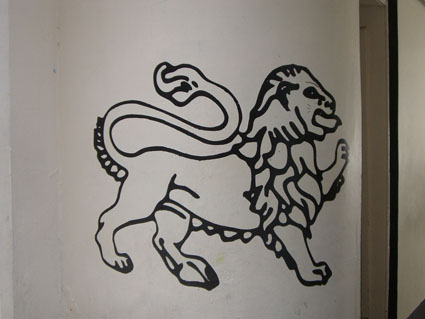
White Lions


I can only walk in circles here,

I can only glance as far as the next concrete wall.

To my left: concrete

To my right: concrete

Hard cobble stones under my feet

High above in the sky

A patch of blue to fill my eyes.


If above were below

I could drown myself in the flow

Of a white cloud-lion in blue.


Baby, it sounds fair

That you should be here.

Baby, it sounds fair

That you should get your share.


White lions streaming through blue air

Leaving behind a yearning, a loss and a fear.

White lions streaming through my soul

During freezing nights, as black as coal.

When I’m sitting here awake,

Remembering the blade

Eyes fixed on another patch of lesser grey.


Hey Baby, out in the world!

Don’t you think it’d be fair

That you’d be here?


White lions...and the night

Starts to fill my mind

Like the black bitter coffe

The one from the fuel station by the road

I’ve left behind.

There are no more roads for me now

None but those in my mind.


White ribbons and purple and blue

On your wedding day.

I saw your black curls and couldn’t,

Just couldn’t drink your promise away!

I can still hear your voice and your words

They cut through my mind

But nothing left for me now

All just hatred and grind.


I can remember your eyes burning in his

And how I couldn’t resist the feeling,

The urge to cut and destroy,

To beat and crush.

White lions, Baby

Where streaming through my soul

As I dropped the knife.


Now you are a widow,

Unmarried, your hopes destroyed.

And I’m sitting here

Between concrete walls and barrs

To merely exist in a void.


Yeah, - I think it would be fair

If you’d be sitting right there

So I could ask you why

Why wouldn’t you give me a second chance?

No need for me then to sit here

For vain romance

For a moment of rage and indulgence

And other people’s revenge.


You said words count for nothing

And you’d know me and my kind

But let me tell you this Babe,

And get it in your mind:


A deed is words unspoken

And I hope you will hear me scream

Forever in your head, girl

Without one night left for sleep!


For you should sit with me here

Holding your lies in your lap

Be awake with me here

On this itchy, pitchy bed

On a white lions head!


BerylliumN